
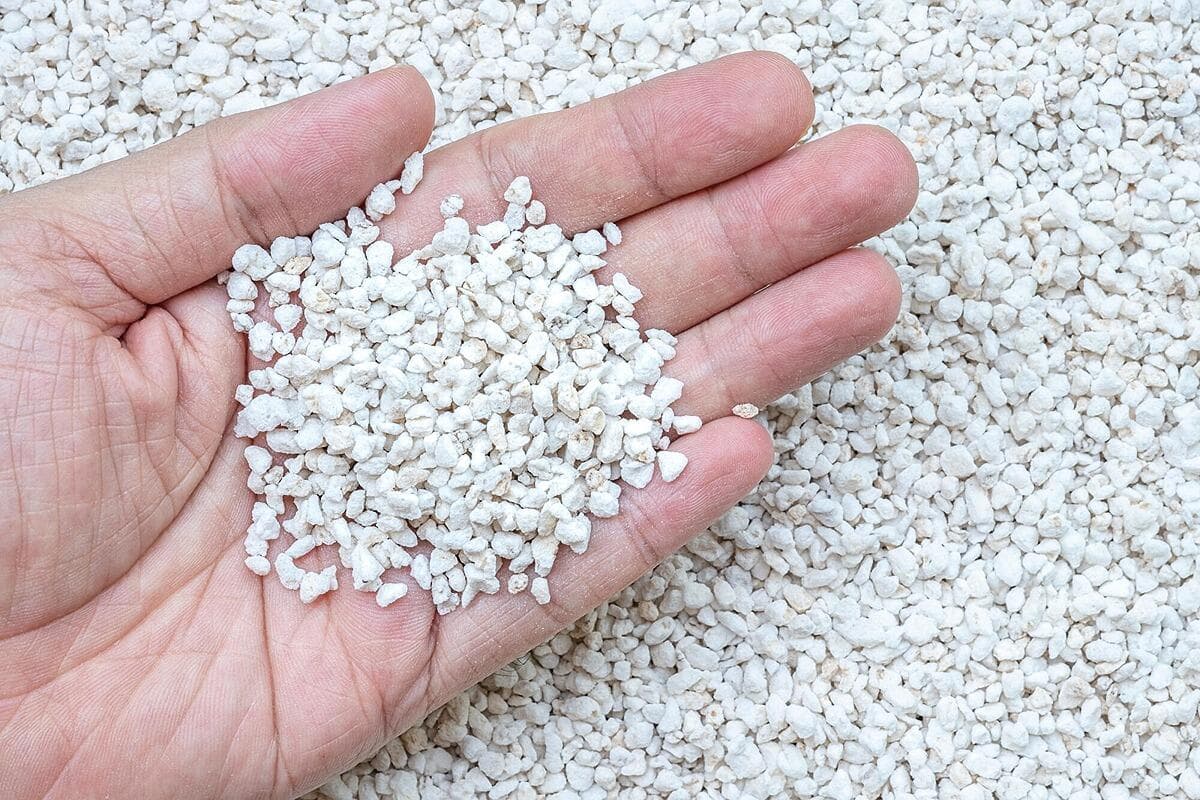


Perlite 250 gm
Choose Variant


Specification
Product Description
Perlite is a natural, lightweight volcanic mineral widely used in gardening, horticulture, and plant cultivation. It is formed by heating volcanic glass at high temperatures, causing it to expand into small, white, lightweight granules. Perlite is an excellent soil amendment that improves soil structure, drainage, and aeration.
It helps prevent soil compaction and allows better airflow around plant roots, promoting healthy root development. Its porous structure helps retain a small amount of moisture while allowing excess water to drain easily, reducing the risk of waterlogging and root rot.
Perlite is suitable for a wide variety of plants, including succulents, adeniums, cacti, orchids, indoor plants, and flowering plants. It can be mixed with garden soil, cocopeat, compost, or potting mix to create a well-draining growing medium.
Another advantage of perlite is that it is lightweight, odourless, pH-neutral, and resistant to decomposition. It is also clean and easy to handle, making it an ideal choice for both home gardeners and professional nurseries.
Perlite is a simple yet effective solution for improving soil quality and creating the perfect growing environment for healthy, strong, and beautiful plants.
KEY PROPERTIES
LIGHTWEIGHT & POROUS: Raw perlite has a dense bulk, but expanded perlite is extremely light (about 30–150 kg/m³) and filled with microscopic air spaces.
CHEMICALLY INERT & STERILE: It is sterile, free of weeds, pests, and diseases, and does not decompose or break down over time.
PH NEUTRAL: It typically has a neutral pH (ranging from about 6.6 to 7.5), meaning it won't change the acidity or alkalinity of your soil.
MOISTURE AND AIR BALANCE: It prevents soil compaction and allows excess water to drain freely while holding onto a small amount of moisture and oxygen for roots.
MAIN USES
1. GARDENING AND HORTICULTURE
SOIL AMENDMENT: Mixed into potting soil, cocopeat, or compost (typically 20% to 40% of the mix) to boost drainage and airflow for indoor plants, container gardens, succulents, and cacti.
SEED STARTING AND PROPAGATION: Used as a sterile, lightweight medium or mixed with vermiculite to help plant cuttings and seeds root faster.
HYDROPONICS: Used as a clean, soilless growing medium for water-based or automated plant culture.
ROOFTOP & TERRACE GARDENS: Dramatically reduces the overall deadweight of soil containers on building roofs.
2. INDUSTRIAL APPLICATIONS
FILTRATION: Used as an alternative to diatomaceous earth for clarifying liquids and swimming pool filtration.
INSULATION & CONSTRUCTION: Used in lightweight concrete, plaster mixes, roof insulation boards, and high-temperature thermal protection.
ADVANTAGES & DISADVANTAGES
PROS: Prevents root rot, stops soil compaction, lasts for years without decomposing, and is safe and non-toxic.
CONS: Because it is so lightweight, it can float to the top of the pot if soil is watered too aggressively ("perlite float"). Fine perlite dust can also act as a respiratory irritant when dry, so working with it in a well-ventilated area is recommended.